This website uses cookies to improve your experience. We'll assume you're ok with this, but you can opt-out if you wish. Read More
Menu
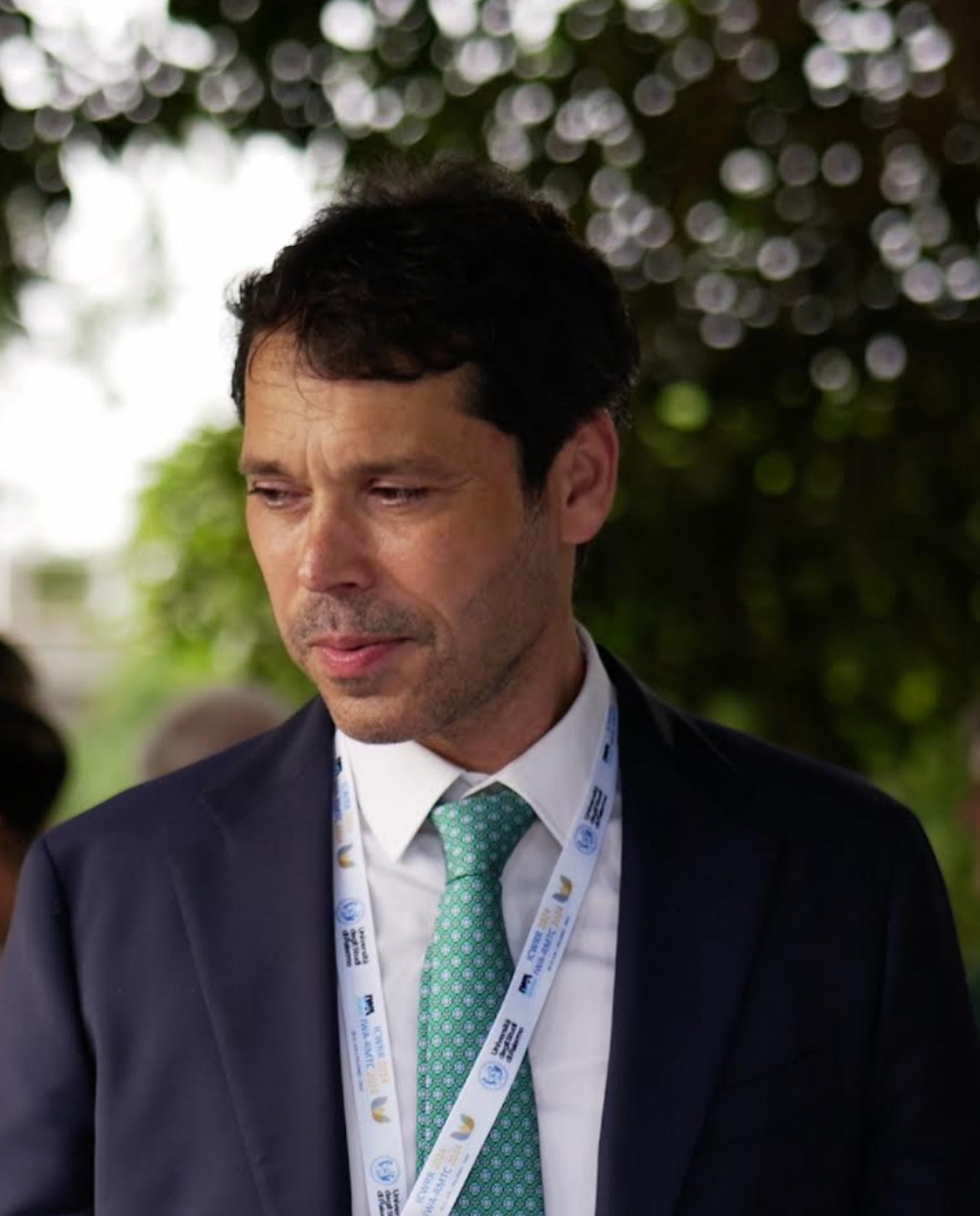

Prof Giorgio Mannina
Professor of Sanitary and Environmental Engineering, Palermo University, Italy
Director and Founder of the Water Resource Recovery Facility, Palermo University, Italy
Chair of the Bachelor and Master degrees in Civil Engineering at Palermo University
Chair of the double degrees in Environmental and Civil Engineering at Palermo University with Tongji University (China), Gdansk University (Poland), and Tianjin Chengjian University (China)
Curriculum vitae (CV)
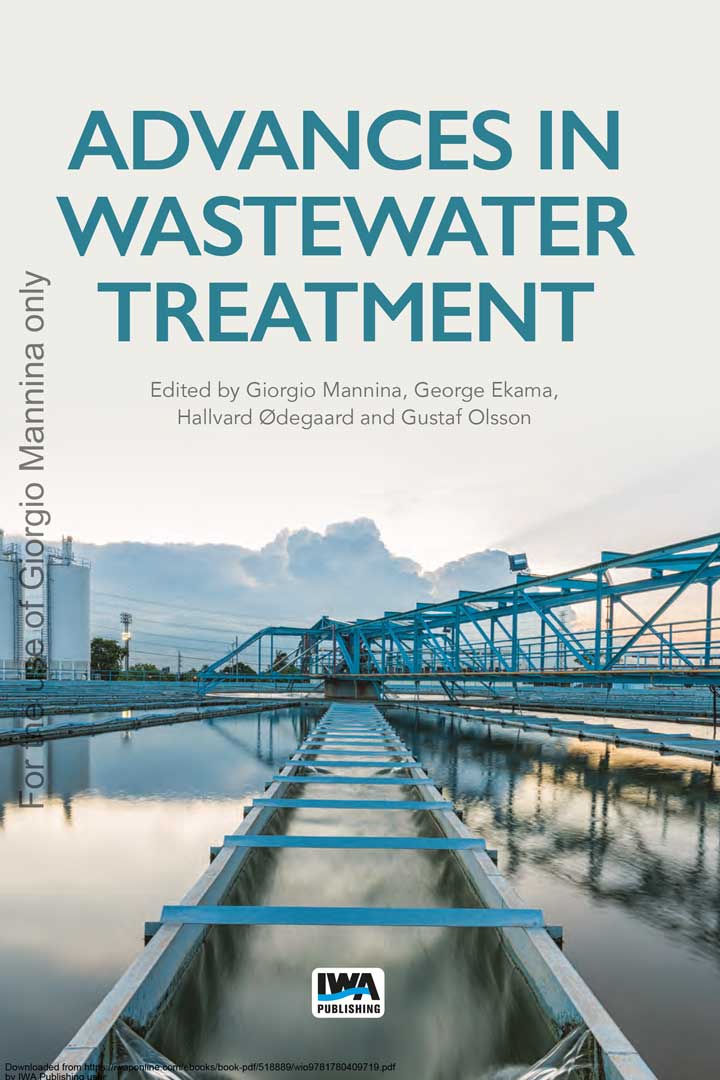
Advances in Wastewater TreatmentAvailable
Advances in Wastewater Treatment presents a compendium of the key topics surrounding wastewater treatment, assembled by looking at the future technologies, and provides future perspectives in wastewater treatment and modelling. It covers the fundamentals and innovative wastewater treatment processes (such as membrane bioreactors and granular process). Furthermore, it focuses attention on mathematical modelling aspects in the field of wastewater treatments by highlighting the key role of models in process design, operation and control. Other topics include:
Anaerobic digestion
Biological nutrient removal
Instrumentation, control and automation
Computational fluid dynamics in wastewater
IFAS systems
New frontiers in wastewater treatment
Greenhouse gas emissions from wastewater treatment
Each topic is addressed by discussing past, present and future trends.
Advances in Wastewater Treatment is a valid support for researchers, practitioners and also students to have a frame of the frontiers in wastewater treatment and modelling.
ISBN: 9781780409702 (Paperback)
ISBN: 9781780409719 (eBook)
Current Developments in Biotechnology and Bioengineering
Advanced Membrane Separation Processes for Sustainable Water and Wastewater Management - Case Studies and Sustainability Analysis
Current Developments in Biotechnology and Bioengineering: Advanced Membrane Separation Processes for Sustainable Water and Wastewater Management – Case Studies and Sustainability Analysis gives an up-to-date review and research developments of MBR systems (including hybrid systems) in wastewater treatment in terms of pollutant removal, nutrient recovery, and energy production as well as the achievement of energy efficiency of the process itself. The current challenges that hinder the application and industrialization of MBR technology as well as knowledge gaps and future research perspectives are also discussed, including possible strategies to solve the various problems involved.
This work is an excellent reference for education and understanding of biotechnology, microbiology, environmental science and technology, environmental engineering, chemical engineering, biotechnology and bioengineering research and development. It is also an invaluable resource to postgraduate and doctoral students, educators, professional course students, researchers, and wastewater treatment professionals.
Current Developments in Biotechnology and Bioengineering
Advanced Membrane Separation Processes for Sustainable Water and Wastewater Management - Aerobic Membrane Bioreactor Processes and Technologies
Current Developments in Biotechnology and Bioengineering: Advanced Membrane Separation Processes for Sustainable Water and Wastewater Management – Aerobic Membrane Bioreactor Processes and Technologies consolidates up-to-date research developments in AeMBR systems for wastewater treatments in terms of membrane materials and decorations, reactor designs and fouling mechanisms. It includes discussions on developments in AeMBR research on energy efficiency and fouling control strategies, gaps, future research and application perspectives. This book is a potential resource for membrane separation and AeMBR practitioners, engineers, scientists, educators and students, and public to understand the latest developments and future prospects in membrane technology.
Current Developments in Biotechnology and Bioengineering
Advanced Membrane Separation Processes for Sustainable Water and Wastewater Management ¯ Anaerobic Membrane Bioreactor Processes and Technologies
Current Developments in Biotechnology and Bioengineering: Advanced Membrane Separation Processes for Sustainable Water and Wastewater Management –Anaerobic Membrane Bioreactor Processes and Technologies gives an up-to-date review on research developments of AnMBR systems (including hybrid systems) in wastewater treatment in terms of pollutants removal, nutrients recovery and energy production, as well as the achievement of energy efficiency of the process itself. The current challenges that hinder the application and industrialization of AnMBR technology, knowledge gaps and future research perspectives are also explained and discussed with potential strategies for solving problems.
The book is a potential resource for engineers, scientists, educators, students and general public to understand the current developments and future prospects in field of AnMBR research.
Current Developments in Biotechnology and Bioengineering
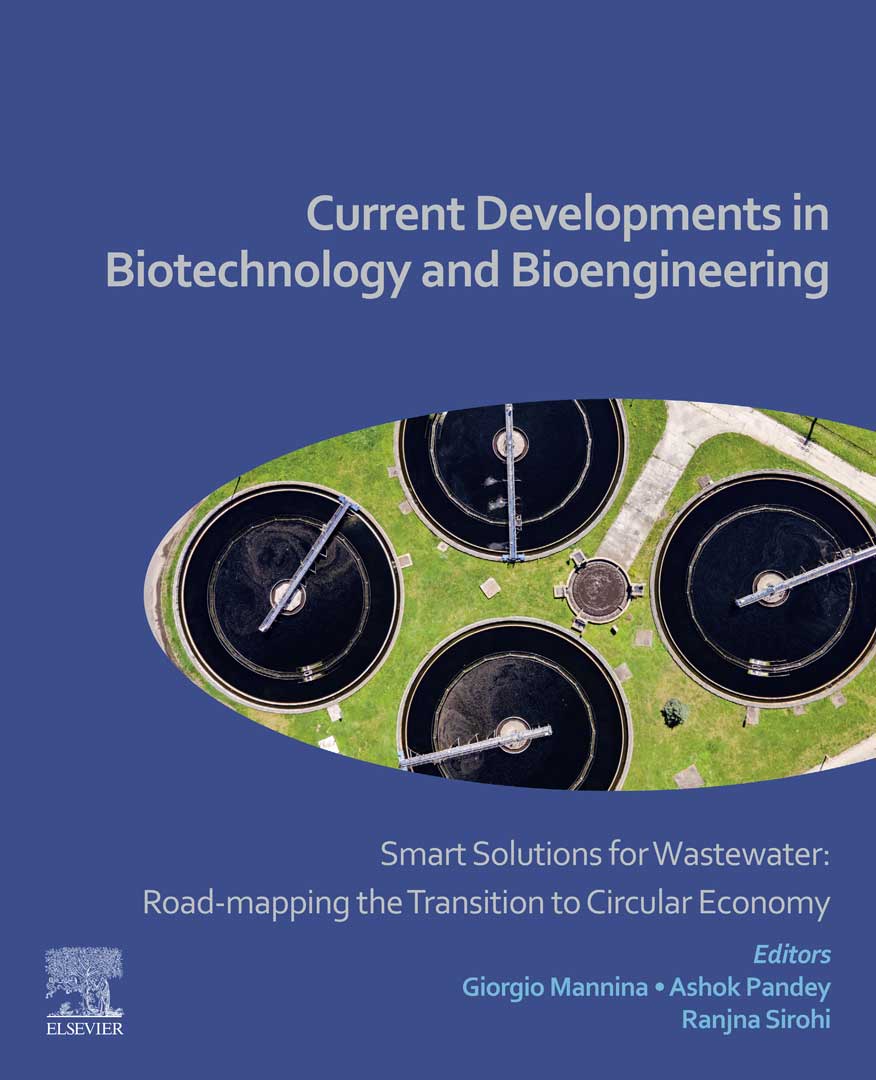
Smart Solutions for Wastewater: Road-mapping the Transition to Circular Economy
Smart Solutions for Wastewater: Road-mapping the Transition to Circular Economy, the latest release in the Current Developments in Biotechnology and Bioengineering presents up-to-date information on research and technological developments of resource recovery in wastewater treatment in terms of carbon, nutrients and energy. The book fulfils the gaps and current challenges that hinder the application of resource recovery facilities in wastewater treatment plants, discusses knowledge gaps, provides future research perspectives, and discusses strategies to solve problems from a circular economy perspective. It is an excellent, interdisciplinary and updated overview of technologies in terms of potential yields, pollutants removal, nutrients recovery and energy production.
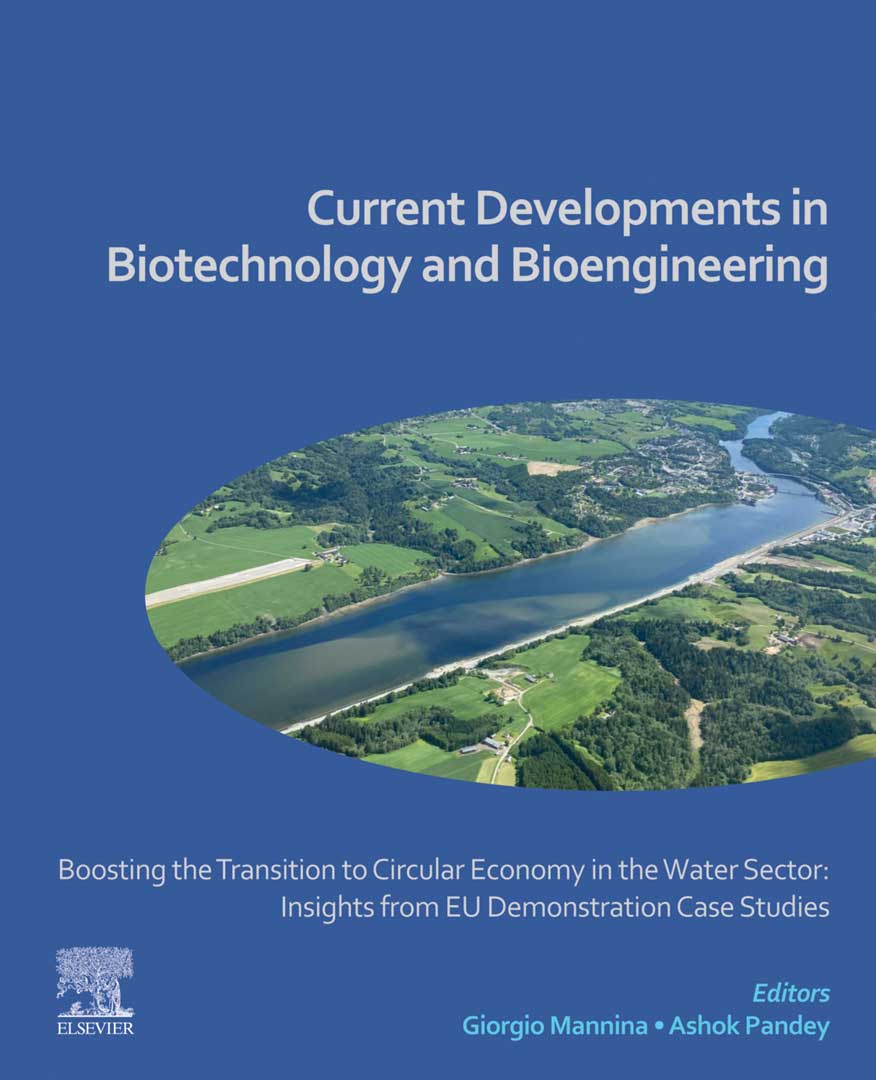
Boosting the Transition to Circular Economy in the Water Sector: Insights from EU Demonstration Case Studies
Current Developments in Biotechnology and Bioengineering
Boosting the Transition to Circular Economy in the Water Sector: Insights from EU Demonstration Case Studies covers a wide range of topics within the circular economy concept applied to the water sector, including water recovery and reuse, bioplastic and fertilizers from wastewater treatment, and new biocomposite materials from the water cycle. This book presents insights gained from recent EU projects reporting solutions, technologies, tools, and strategies to overcome the existing barriers hampering the circular economy transition process. This book combines practical and theoretical knowledge of the circular economy of the water sector, thus being useful for both researchers, professionals, and actors making local decisions.
The book provides a holistic overview of the current status of the recent progress in resource recovery from wastewater treatment, including fundamental aspects and development of processes, as well as the needs of further research and industrialization. It gives special emphasis and discussion on green technologies for resource recovery from wastewater and bottlenecks regarding their applications. As a future green bioprocess, biogas production and waste minimization, opportunities, future perspectives, and research needs are also discussed.
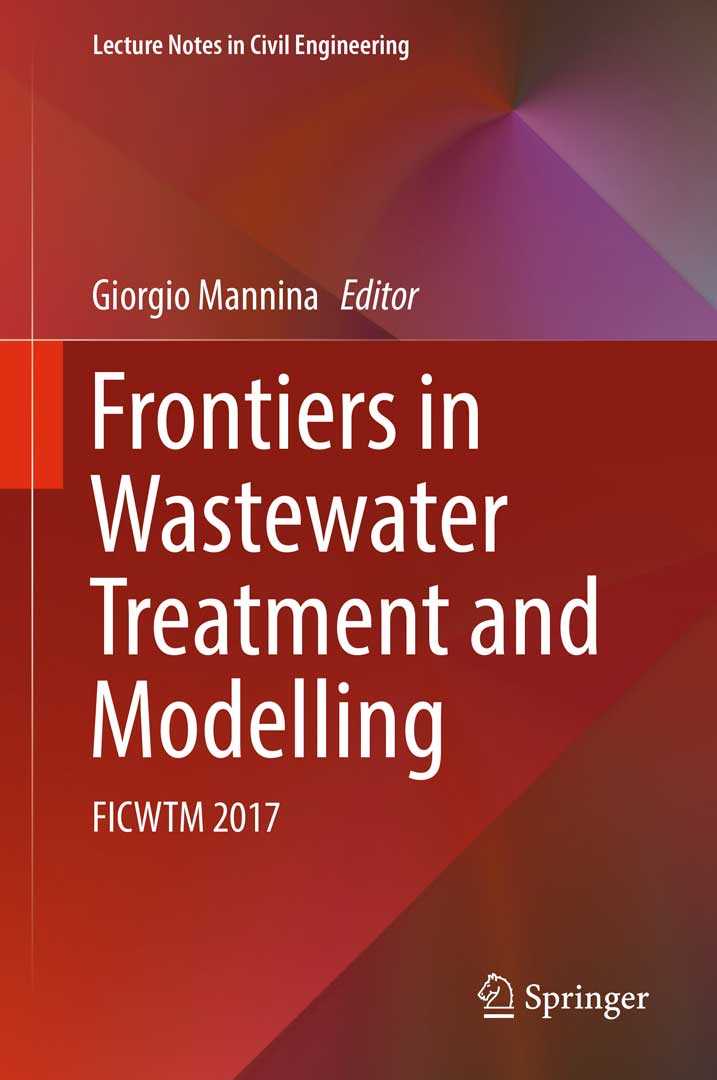
Frontiers in Wastewater Treatment and Modelling
This book describes the latest research advances, innovations, and applications in the field of water management and environmental engineering as presented by leading researchers, engineers, life scientists and practitioners from around the world at the Frontiers International Conference on Wastewater Treatment (FICWTM), held in Palermo, Italy in May 2017. The topics covered are highly diverse and include the physical processes of mixing and dispersion, biological developments and mathematical modeling, such as computational fluid dynamics in wastewater, MBBR and hybrid systems, membrane bioreactors, anaerobic digestion, reduction of greenhouse gases from wastewater treatment plants, and energy optimization.
The contributions amply demonstrate that the application of cost-effective technologies for waste treatment and control is urgently needed so as to implement appropriate regulatory measures that ensure pollution prevention and remediation, safeguard public health, and preserve the environment. The contributions were selected by means of a rigorous peer-review process and highlight many exciting ideas that will spur novel research directions and foster multidisciplinary collaboration among different water specialists.
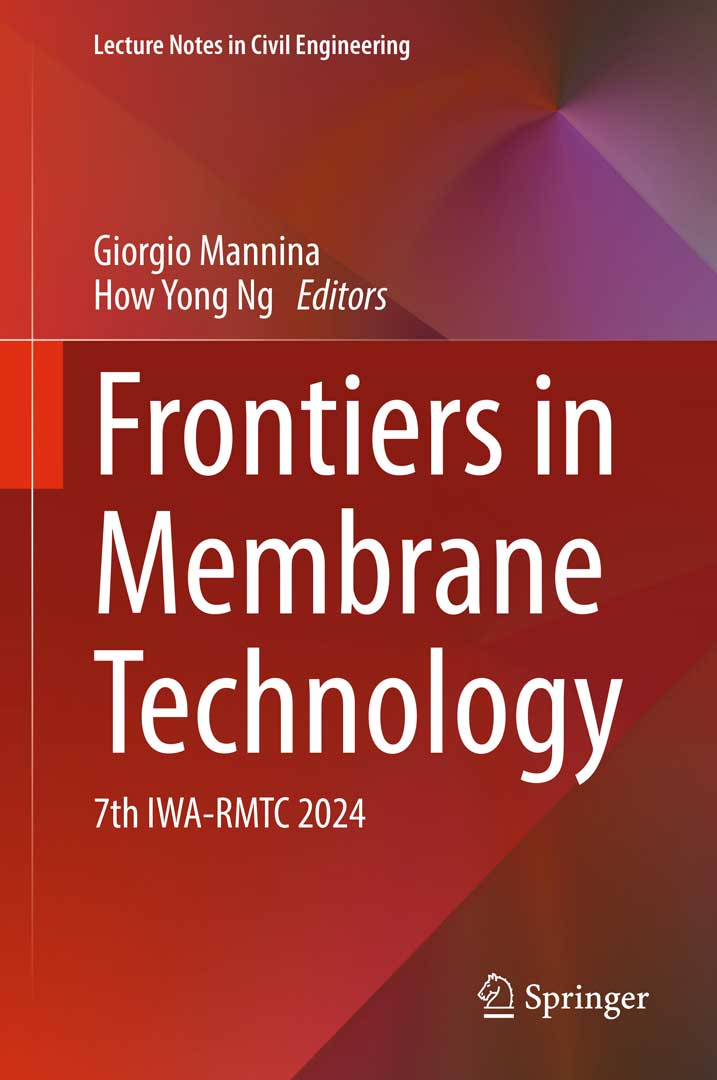
Frontiers in Membrane Technology
This volume highlights the latest advances, innovations, and applications related to membrane technologies for water and wastewater treatment as presented by leading researchers at the 7th IWA Regional Membrane Technology Conference (IWA-RMTC), held in Palermo, Italy on June 18-21, 2024. The event took place together with the International Conference on Wider-Uptake of Water Resource Recovery from Wastewater Treatment (ICWRR). The contributions cover a wide range of topics such as membrane materials and configurations, hybrid membrane processes, drinking water treatment, domestic/industrial wastewater treatment, water reuse, resource recovery from wastewater, energy recovery from water and wastewater, desalination, membrane fouling mechanisms and control. The contributions were selected by means of a rigorous peer-review process and highlight many exciting ideas that will spur novel research directions and foster multidisciplinary collaboration among different water specialists.
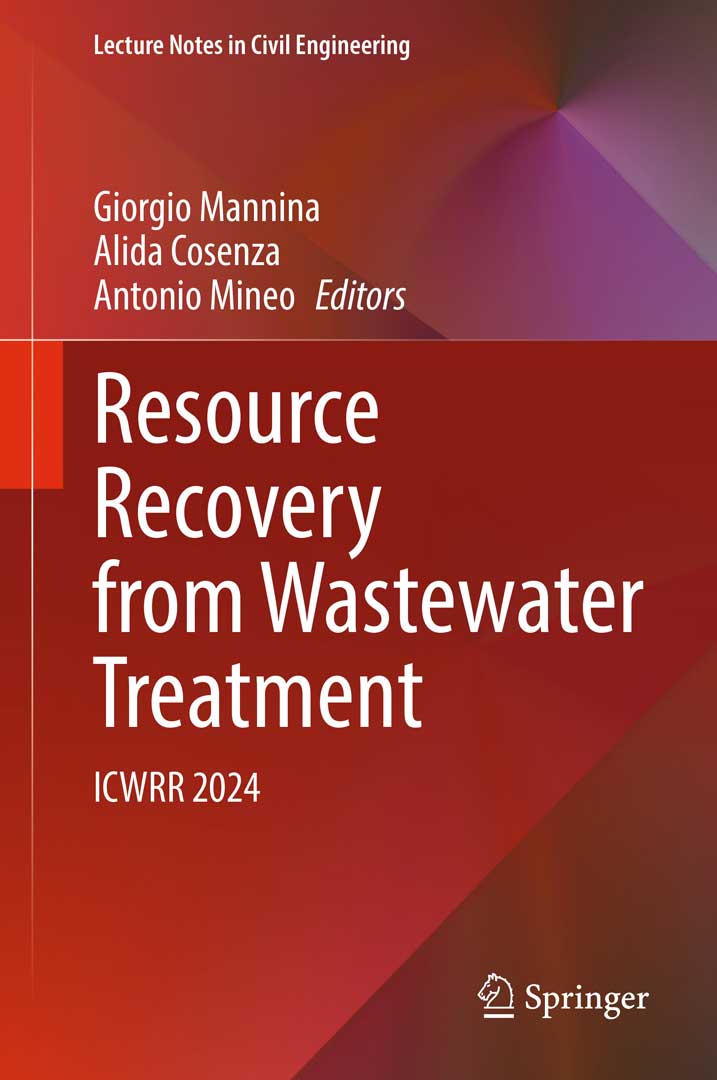
Resource Recovery from Wastewater Treatment
This volume highlights the latest advances, innovations, and applications in the field of water resource recovery from water treatment as presented by leading researchers at the International Conference on Wider-Uptake of Water Resource Recovery from Wastewater Treatment (ICWRR), held in Palermo, Italy on June 18-21, 2024. The event took place together with the 7th IWA Regional Membrane Technology Conference (IWA-RMTC). The contributions cover a wide range of themes from innovative and nature-based solutions for water and wastewater management to circularity assessment tools and environmental policy and legislation. The topics include resource recovery from wastewater, wastewater treatment, membrane bioreactors, greenhouse gases from wastewater treatment, LCA, water reuse & rainwater harvesting, mathematical modelling of wastewater treatment plants, metagenomics analysis and environmental microbiology, environmental policy and legislation in the water sector, plant-water-soil nexus, fertilizers from wastewater. The contributions were selected by means of a rigorous peer-review process and highlight many exciting ideas that will spur novel research directions and foster multidisciplinary collaboration among different water specialists.
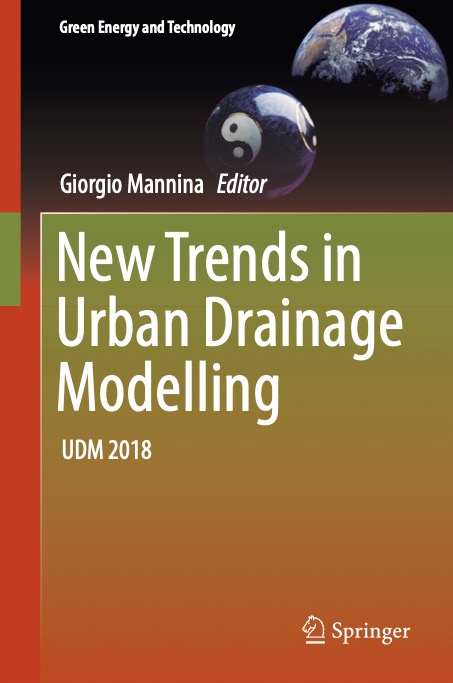
New Trends in Urban Drainage Modelling
This book addresses the latest research advances, innovations, and applications in the field of urban drainage and water management as presented by leading researchers, scientists and practitioners from around the world at the 11th International Conference on Urban Drainage Modelling (UDM), held in Palermo, Italy from 23 to 26 September, 2018. The conference was promoted and organized by the University of Palermo, Italy and the International Working Group on Data and Models, with the support of four of the world’s leading organizations in the water sector: the International Water Association (IWA), International Association for Hydro-Environment Engineering and Research (IAHR), Environmental & Water Resources Institute (EWRI) – ASCE, and the International Environmental Modelling and Software Society (iEMSs). The topics covered are highly diverse and include drainage and impact mitigation, water quality, rainfall in urban areas, urban hydrologic and hydraulic processes, tools, techniques and analysis in urban drainage modelling, modelling interactions and integrated systems, transport and sewer processes (incl. micropollutants and pathogens), and water management and climate change. The conference’s primary goal is to offer a forum for promoting discussions amongst scientists and professionals on the interrelationships between the entire water cycle, environment and society.