Short Bio

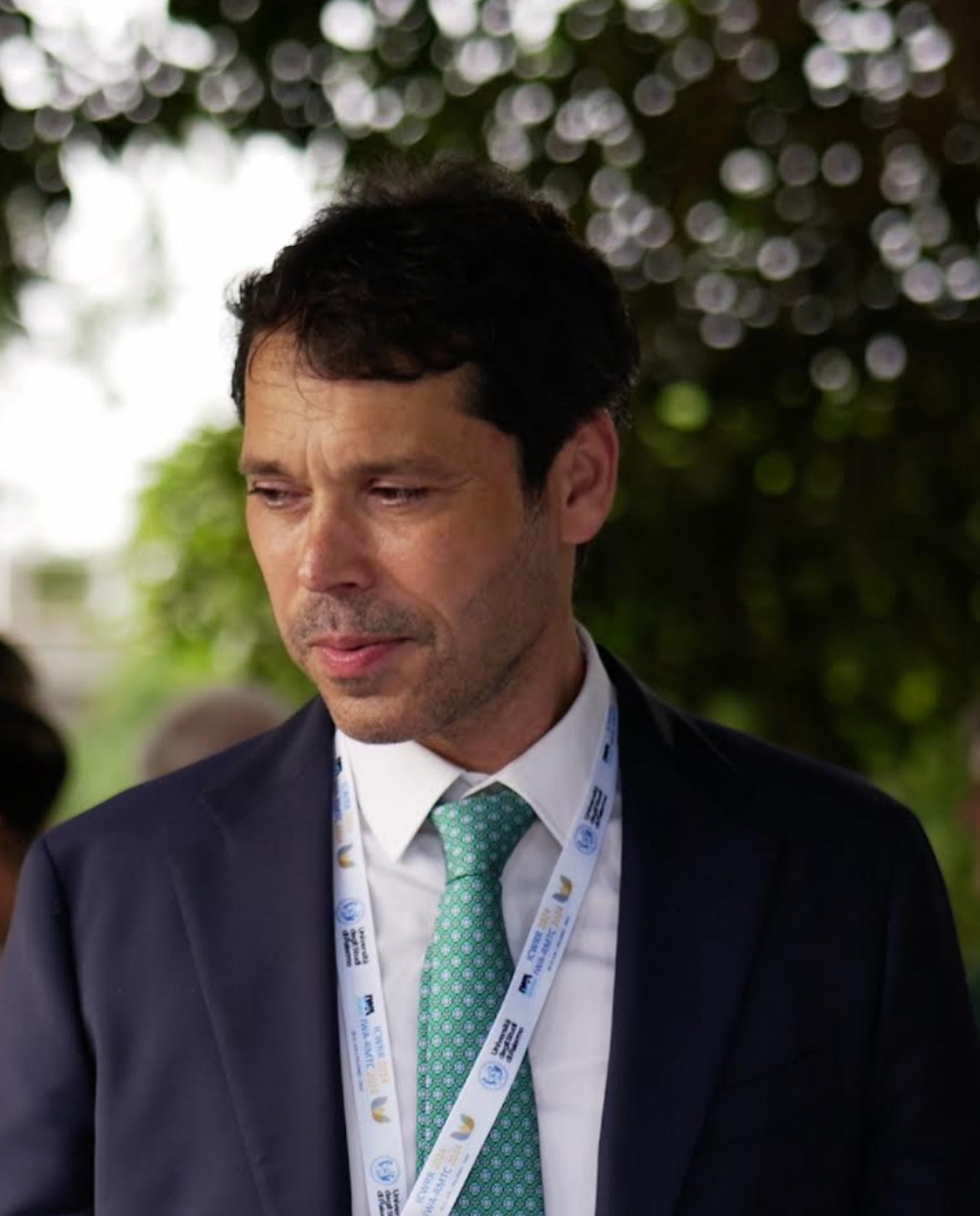
Giorgio Mannina is an Italian Full Professor of Sanitary and Environmental Engineering at the University of Palermo (Università di Palermo) in Italy, where he works in the Engineering Department. He is Director of the Water Resource Recovery Facility and the Water & Resource Recovery Lab at Palermo University and leads research on advanced wastewater treatment technologies (including membrane bioreactors such as MBR, MBBR and hybrid systems), biological nutrient removal (BNR), environmental water quality modelling, integrated urban drainage systems, and resource recovery from wastewater and mathematical modelling.
Mannina has held leadership roles in the International Water Association (IWA), including Chair of the Task Group on Membrane Bioreactor Modelling & Control, and he was selected as an IWA Fellow in 2024. He has received several international awards for research contributions, including the iEMSs Biennial Medal Award 2022 for exceptional research in environmental modelling.
Prof. Mannina has published over 400 scientific papers, including more than 180 in ISI-indexed journals, and has edited multiple books on water and wastewater engineering with outstanding publisher such as Elsevier and Springer. He is/has been editor, associate editor, or guest editor for several international journals including Journal of Hydrology, Journal of Bioresource Technology, and Journal of Environmental Management. He has been Visiting Professor/Researcher at institutions such as Columbia University (New York, USA), Tongji University (Shanghai, China), Norwegian University of Science and Technology (NTNU, Norway), Katholieke Universiteit Leuven (Belgium), Laval University (Canada), The University of Queensland (Australia), and Gdansk University of Technology (Poland).

Research themes

Wastewater Treatment

Research explores advanced biological treatment processes and hybrid configurations that improve pollutant and nutrient removal while reducing energy and sludge production. Experimental work integrates pilot and full-scale assessments to optimise process performance and environmental outcomes, including strategies for greenhouse gas emission reduction.
Water Reuse

A core theme is the safe and efficient reuse of treated wastewater in the context of circular economy. Full-scale experiments include the demonstration of ultrafiltration and post-treatment systems at the municipal plant in Corleone (Italy), where barriers to water reuse for agricultural use have been addressed and monitored. Complementary experiments at the Water Resource Recovery Facility (WRRF) of Palermo University test innovative treatment chains and risk assessment approaches to support reuse implementation.
Resource Recovery Biopolymers

Research focuses on the production and integration of polyhydroxyalkanoates (PHAs) within wastewater treatment processes. PHAs are biodegradable biopolymers that can be accumulated by mixed microbial cultures using carbon-rich waste streams; studies include operational strategies, pilot-plant monitoring and assessment of PHA yields as part of a resource-oriented treatment paradigm.

Resource Recovery Nutrient Recovery

Activities investigate nutrient capture and reuse, especially nitrogen and phosphorus. Experimental work with natural and modified zeolites evaluates ammonium adsorption and regeneration, while biochar materials are tested for nutrient retention and agronomic potential. These studies aim to transform by-products of treatment into value-added materials within circular system frameworks.

Membrane Bioreactors

Membrane bioreactor (MBR) systems are a longstanding research focus, with work on fouling control, hybrid MBR configurations, process optimisation, integration with nutrient and biopolymer recovery and development of innovative MBRs. MBR research supports the production of high-quality effluent for reuse and resource recovery.
Greenhouse Gas Emission Reduction

Research quantifies and mitigates greenhouse gases (e.g. nitrous oxide) from wastewater processes. Studies combine monitoring with process and control strategies to reduce emissions and enhance sustainability of treatment systems.

Contaminants of Emerging Concern - Microplastics

A growing focus is on understanding and managing contaminants of emerging concern, notably microplastics. Research investigates occurrence, fate, and retention in real-wastewater treatment systems to inform mitigation and improve environmental protection.

Mathematical Modelling

Mechanistic and data-driven models are developed to simulate treatment processes, recovery pathways, membrane systems, and integrated water cycles. Modelling supports optimisation, uncertainty analysis, and digital twin applications to inform design, monitoring and real-time management.
Research projects

SUSTAINABLE WATER ENGINEERING AND MANAGEMENT
WATER4FUTURE

Horizon 2020 – European Commission
Grant
No. 869283 | 2020–2024

This project aimed to accelerate the implementation of water-smart solutions in Europe by promoting circular economy strategies in wastewater treatment. Activities included full-scale optimisation of wastewater treatment plants, water reuse schemes, nutrient recovery, polyhydroxyalkanoate production, and greenhouse gas mitigation strategies. The project combined technological innovation with decision-support frameworks and stakeholder engagement to enable large-scale uptake.

ACHIEVING WIDER UPTAKE OF WATER-SMART SOLUTIONS
WIDER UPTAKE

Erasmus Mundus Design Measures – European Commission
Grant No. 101241113 | 2025-2026
Principal Investigator (Palermo University)

This project aimed to accelerate the implementation of water-smart solutions in Europe by promoting circular economy strategies in wastewater treatment. Activities included full-scale optimisation of wastewater treatment plants, water reuse schemes, nutrient recovery, polyhydroxyalkanoate production, and greenhouse gas mitigation strategies. The project combined technological innovation with decision-support frameworks and stakeholder engagement to enable large-scale uptake.

INNOVATIVE MEMBRANE TECHNOLOGIES FOR ADVANCED
AND SUSTAINABLE WASTEWATER TREATMENT
IMTECH

PRIN 2022 PNRR – Italian Ministry of University
and Research
2022–2026

This project focuses on scaling up and testing nature-based membranes (NBMs) for enhanced pollutant removal, including micropollutants and microplastics, while reducing greenhouse gas emissions. The research integrates advanced membrane systems, resource recovery, and modelling to promote circular economy solutions in wastewater treatment plants.

ENERGY CONSUMPTION AND CLIMATE CHANGE
GASES IN SEWAGE PLANTS: A DECISION SUPPORT SYSTEM
FOR SIZING AND MANAGEMENT

PRIN 2012 – Italian Ministry of Education,
Universities and Research

The project developed experimental methods and mathematical models for quantifying greenhouse gas emissions (N₂O, CH₄, CO₂) from wastewater treatment plants. A decision support system (DSS) was implemented to optimise plant operation and reduce environmental footprint. This work contributed significantly to plant-wide modelling approaches for carbon and energy management.

Peer recognition

International Water Association (IWA) Fellow 

Water Europe Innovation Award for UNIPA Water Resource Recovery Facility
Water Reuse Europe Recognition for UNIPA Water Resource Recovery Facilit
iEMSs Biennial Medal Award

Fulbright Research Fellowship at Columbia University (New York)