This website uses cookies to improve your experience. We'll assume you're ok with this, but you can opt-out if you wish. Read More
Menu


Prof Giorgio Mannina
Professor of Sanitary and Environmental Engineering, Palermo University, Italy
Director and Founder of the Water Resource Recovery Facility, Palermo University, Italy
Chair of the Bachelor and Master degrees in Civil Engineering at Palermo University
Chair of the double degrees in Environmental and Civil Engineering at Palermo University with Tongji University (China), Gdansk University (Poland), and Tianjin Chengjian University (China)
Curriculum vitae (CV)
WRRF-Lab
The Water Resource Recovery Facility’s (WWRF) Lab is the first worldwide circular-economy model applied to water, built within a university campus. The WRRF treats wastewater from the Palermo University campus, including departments, offices, and canteens, applying the circular economy concept: treat-recovery-reuse.
The main resources recovered from wastewater treatment are water for irrigation, nutrients, biopolymers and compost.
The UNIPA-WRRF stands as a leading model for applying the circular bio-economy paradigm to the water sector in Sicily and worldwide, using innovative membranes. Through experimental and mathematical modelling activities, the facility
aims to address climate change challenges and propose novel sustainable solutions for wastewater treatment processes, reducing its carbon footprint towards zero-emission neutrality.
The UNIPA-WRRF received two international recognitions from Water Reuse Europe in 2023 (finalist in innovation prize) and Water Europe in 2024 (first prize innovation award).
Brief background
Within the EU project Achieving Wider-Uptake of water smart solutions, a demo/model of the circular economy applied to water (namely, WRRF) was built and inaugurated in 2022 at Palermo University Campus (ITALY).
The goal was not only to demonstrate the effectiveness of the circular economy model applied to the water sector, but also to foster its application and the transition. The University plays a central role in society through its credibility and education of the next generation. Conferences and national and international events can help the
University establish a trusted voice in society and break down social barriers. Stakeholders, Policymakers, and practitioners visit the University, so the message (the need for circularity in the water sector) can pass through straightforwardly.
Description of the Water Resource Recovery Facility of Palermo University – WRRF-UNIPA
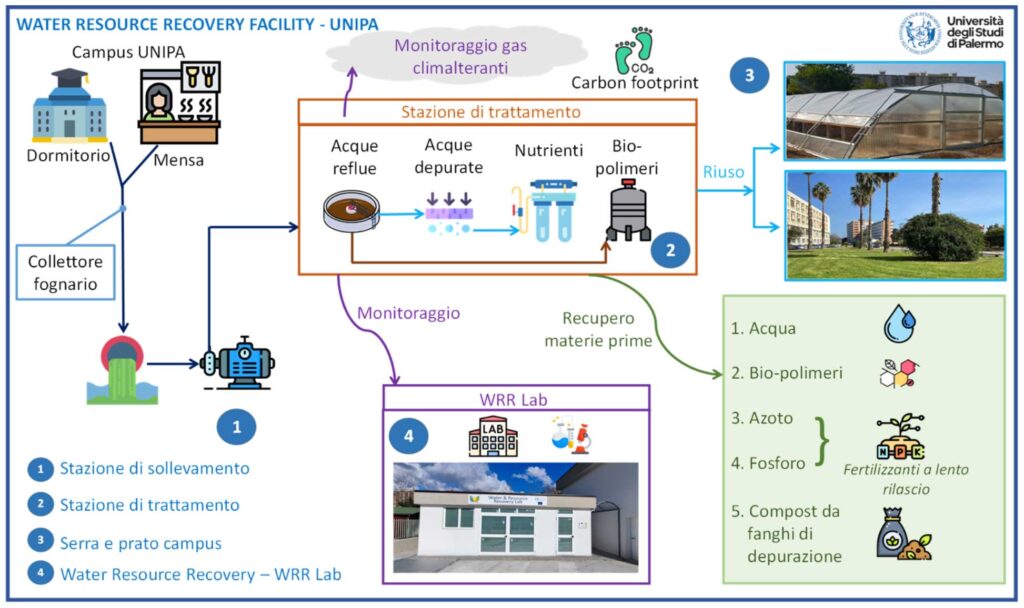
Figure 1 shows the layout of the UNIPA WRRF with the main principal components:
- An innovative pumping station (1500 m underground conduits d=800 mm) for
collecting the wastewater produced by the university campus facilities; - A pilot plant hall composed of three treatment lines (0.7 m 3 /day treatment
capacity): nutrients recovery, biopolymer production and water reuse; - A greenhouse facility and an irrigation system for the green areas of the
campus in order to study the water-soil-plant interaction; - An innovative Water & Resource Recovery laboratory (around 100 m 2 ) is used
to perform chemical-physical analyses, greenhouse gas emissions monitoring
and environmental impact evaluation.
Conceptual scheme of the WRRF – UNIPA.
Goals
The main goal of the WRRF – UNIPA is the recovery of the following resources
from wastewater treatment:
- Nutrients (nitrogen and phosphorus): using adsorption/desorption columns filled with biochar and zeolite to recover the nutrients in view of reusing them in agriculture as slow-release fertilisers.
- Biopolymers for bioplastic materials production: an innovative pilot plant aimed to transform sewage sludge into biopolymers, such as polyhydroxyalkanoates, used as bioplastic precursors. This process reduces harmful waste that requires expensive, energy-intensive disposal treatment while producing a sustainable alternative to conventional petroleum-based plastic materials.
- Water: According to the new law 2020/741 EU, water suitable for reuse in agriculture is produced by applying innovative and advanced wastewater treatment technologies with a low carbon footprint.
- Sewage sludge composting: obtained through a pilot plant aimed to produce compost for reuse in agriculture.
WRRF – UNIPA construction
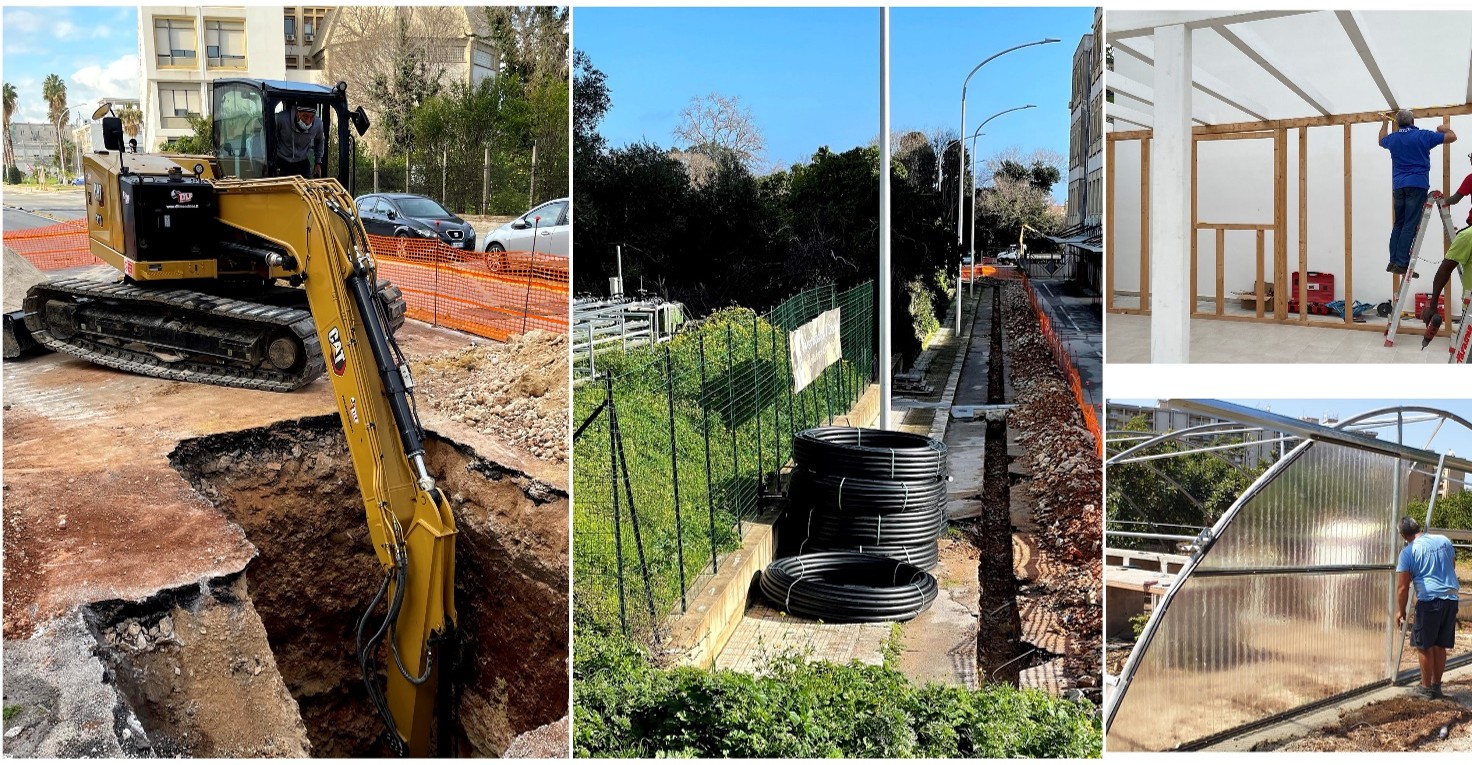
The construction works of the WRRF-UNIPA began in September 2020 and followed
a complex authorization process which saw various bodies and expertise involved:
superintendence of cultural heritage, municipality of Palermo, department of urban
planning and university of Palermo. The demonstration case study was inaugurated
on October 17, 2022.
Construction works of the WRRF-UNIPA.
The innovative technologies of the WRRF – UNIPA
The WRRF-UNIPA adopts innovative technologies for the recovery of resources from the production of water suitable for reuse. The main water-smart solutions adopted are:
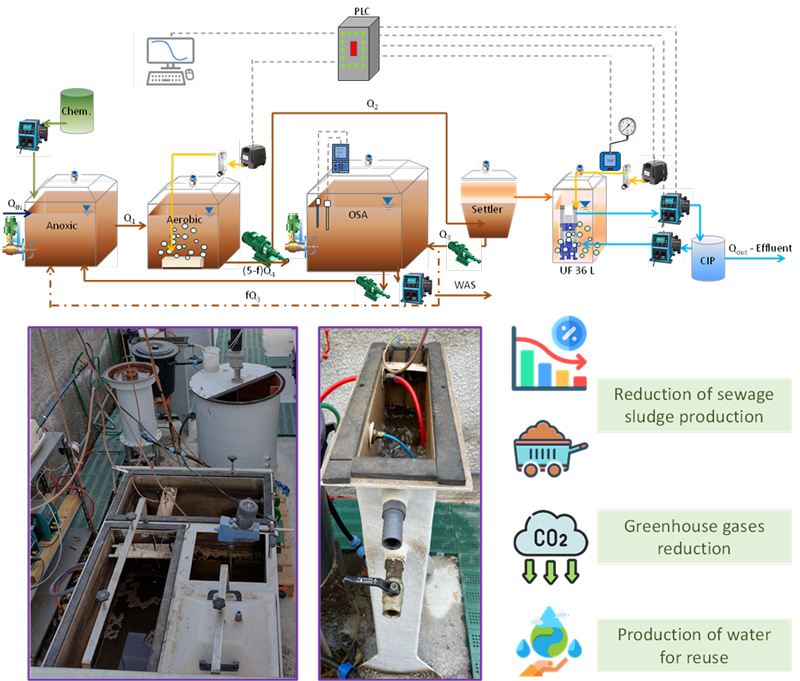
01: Sludge minimisation and production of water suitable for reuse
The wastewater produced within the campus is treated with an innovative and technologically advanced system. Through the application of the innovative Oxic Settling Anaerobic process, the production of sewage sludge to be disposed of is reduced. The use of polymeric or self-forming ultrafiltration membranes allows the
production of water with a quality suitable for agricultural reuse.
Technologies for sludge reduction and production of treated water.
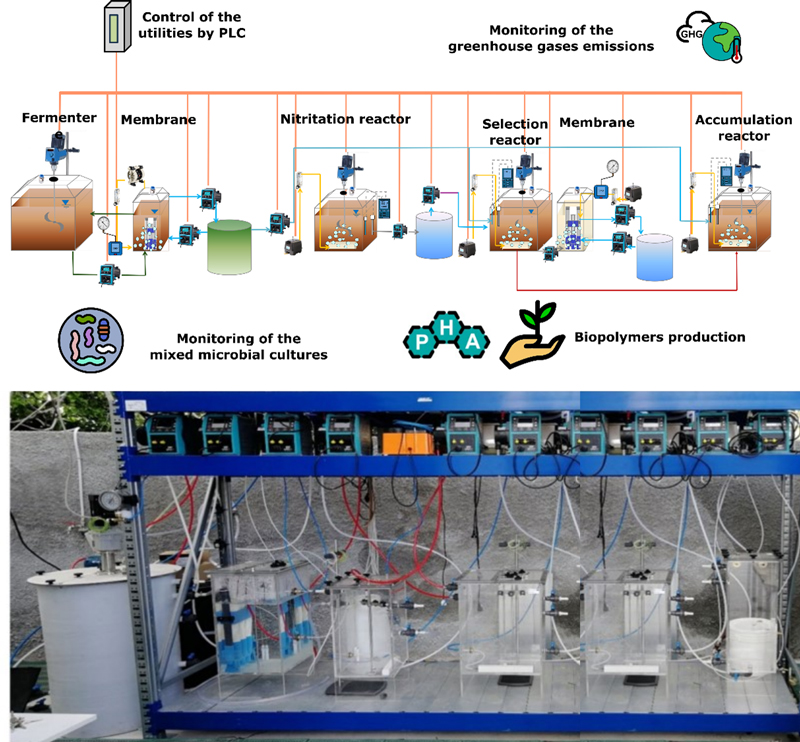
Production of biopolymers (PHA)
The excess sewage sludge produced is used to train the microorganisms capable of producing PHA, which is subsequently extracted and used as a bioplastic precursor.
Technologies for biopolymer production.
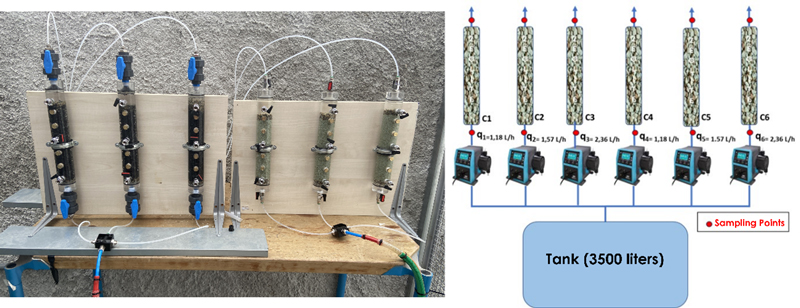
Adsorption/Desorption columnse
Biochar and Zeolite are enriched with nitrogen and phosphorus using ionic adsorption-desorption columns. The enriched materials are then used as slow-release
fertilizers.
Technologies for fertilizers production.
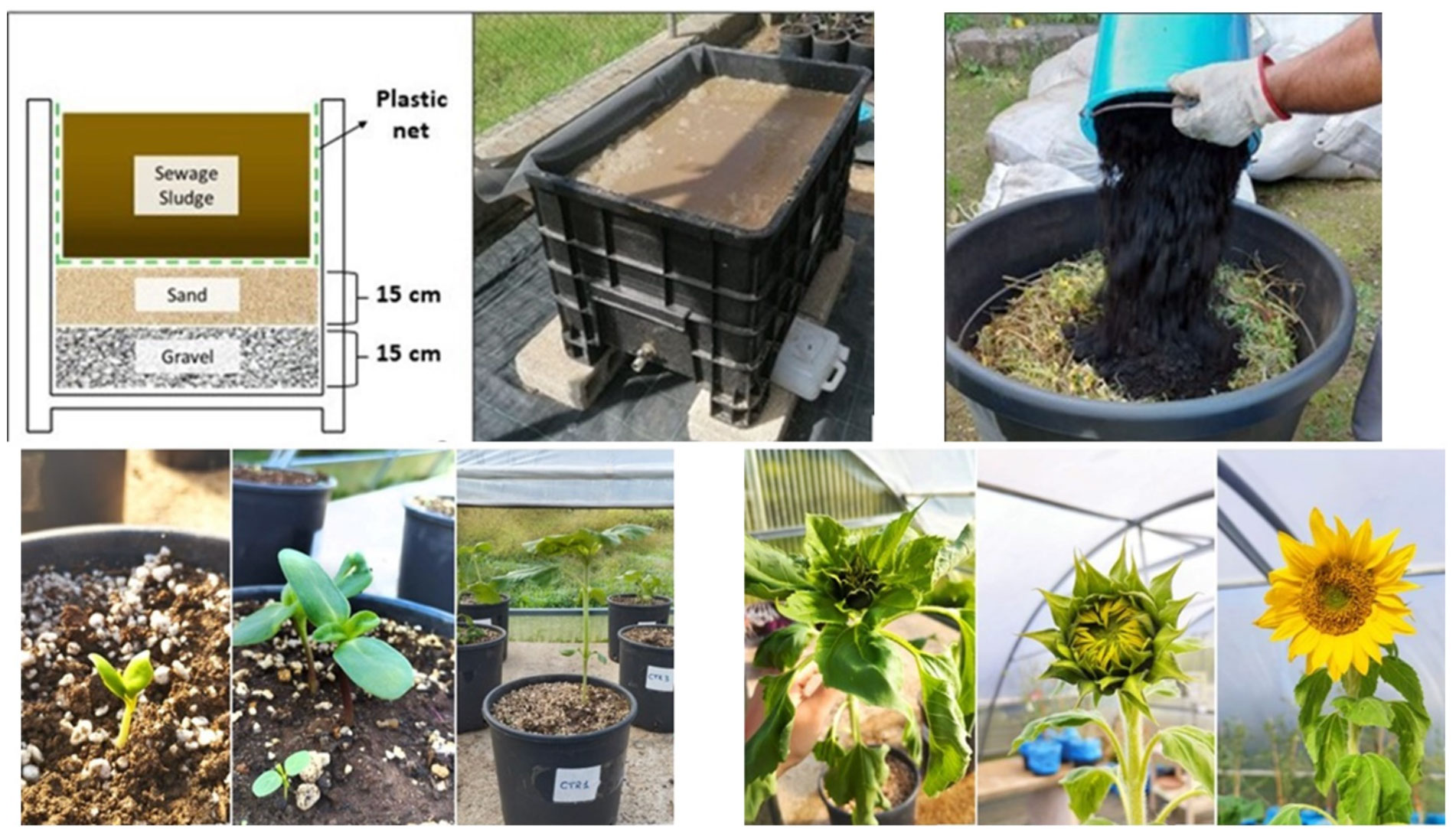
Production of compost from sewage sludge (PHA)
The sludge produced is dried and used as compost for the growth of plants in the
greenhouse facility.
Production of compost from sewage sludge.
Main publications:
- Mannina, G., Badalucco, L., Barbara, L., Cosenza, A., Di Trapani, D., Gallo, G., Laudicina, V.A., Marino, G., Muscarella, S.M., Presti, D., Helness, H. (2021). Enhancing a Transition to a Circular Economy in the Water Sector: The EU Project WIDER UPTAKE. Water, 13, 946. (reference).
- Mannina, G., Alduina, R., Badalucco, L., Barbara, L., Capri, F.C., Cosenza, A., Di Trapani, D., Gallo, G.,Laudicina, V.A., Muscarella, S.M., Presti, D. (2021). Water resource recovery facilities (Wrrfs): The case study of Palermo university (Italy). Water, 13, 3413. (reference).
- Mannina, G., Badalucco, L., Barbara, L., Cosenza, A., Di Trapani, D., Laudicina, V.A., Muscarella, S.M., Presti, D. (2022). Roadmapping the Transition to Water Resource Recovery Facilities: The Two Demonstration Case Studies of Corleone and Marineo (Italy). Water, 14, 156. (reference).
- Mannina, G., Gulhan, H., Ni, B.-J., 2022. Water reuse from wastewater treatment: The transition towards circular economy in the water sector. Bioresource Technology 363,127951. (reference).
- Mannina, G., Cosenza, A., Di Trapani, Gulhan, H., Bosco Mofatto, Mineo, A., P.M., (2024). Reduction of sewage sludge and N2O emissions by an Oxic Settling Anaerobic (OSA) process: The case study of Corleone (Italy) wastewater treatment plant. Science of The Total Environment 906, 167793. (reference).